This content is copyright to www.artemis.bm and should not appear anywhere else, or an infringement has occurred.
With collateralized reinsurance emerging as a key tool for insurers seeking greater flexibility and access to alternative forms of capital, the industry’s focus should be on expanding the overall market for protection, drawing on all types of capital to meet rising demand, Chris McKeown of Vantage Risk told us in an interview.
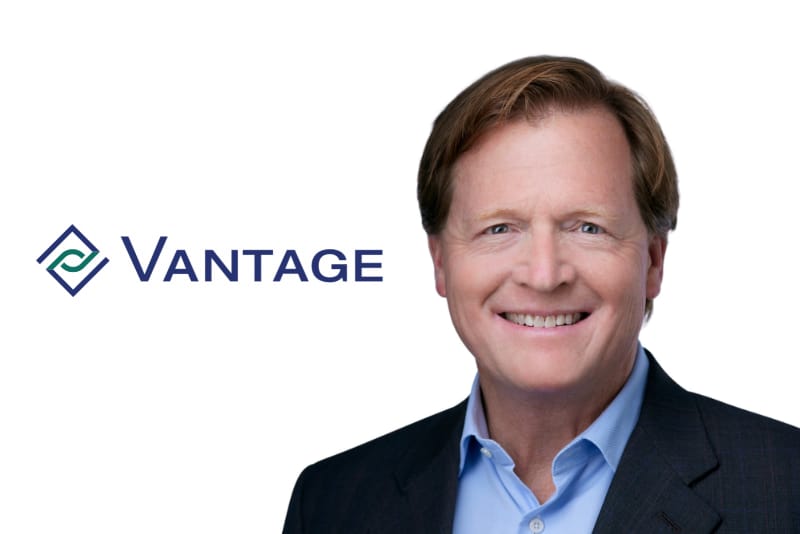 McKeown, who serves as Chief Executive, Reinsurance, ILS, and Innovation at the firm, discussed with Artemis where he sees the balance between collateralized reinsurance and other alternative capital structures shifting towards in the next few years.
“I think there’s tremendous opportunity when we talk about the “protection gap”, the fact that, globally, we still don’t sell enough protection against catastrophic events or risk in general. It’s human nature to put on blinders a bit when it comes to what could happen, and unfortunately, that tendency carries over into our industry,” McKeown said.
“We all have an opportunity to grow the market for protection. The question is whether there’s enough balance sheet capital to keep pace in order to continue providing products that meet that growing need. Maybe there isn’t, but that’s where innovation can play a role.”
The executive told Artemis that he believes more of that innovation will stem from insurance-linked securities (ILS) structures, investors and vehicles that are willing to take on new kinds of risk and push into new products or business models.
“Parametric products are a key example,” McKeown said. “They haven’t quite taken off yet, but they illustrate what’s possible: a simpler, more user-friendly way to buy protection.
“Instead of filing a claim and waiting for an adjuster, a customer could receive a payout automatically if a defined event like a certain amount of rainfall or wind speed occurs. That kind of innovation, supported by ILS capital, could really help expand the overall market.”
McKeown also states that a large batch of investors are sophisticated in their own use of artificial intelligence (AI) and modeling, affirming that they’re asking the right questions that are tackling product innovation that addresses risks more efficiently.
In fact, McKeown stressed that those conversations with ILS investors are highly important and serve as a real catalyst for change and growth across the industry.
“That said, I think we’ll see more affiliated, or hybrid models emerge. Models that bring in collateral to support portfolios, either by fronting for collateralized reinsurers or by partnering with them directly. In some cases, that might even displace the rated carrier altogether, allowing capital to flow more directly to MGAs or other distribution partners. We’re already seeing examples of E&S carriers and MGAs receiving direct support from ILS-backed security or similar structures,” the executive added.
“Overall, I think this is a growing and evolving market, one that’s serving as a catalyst for us to think differently about how to grow the overall pie. Whether that growth comes at the expense of traditional reinsurance or cat bonds isn’t really the point. The goal should be expanding the total market for protection, and to do that, we’ll need to continue accessing all types of capital as we move forward.”
Moving forward, McKeown shared Vantage Risk’s views on AI, and whether the technology is a major priority for the firm going forward.
“It’s a broad topic, but we’ve fully embraced and worked to understand the applications of AI. From day one, we’ve been very deliberate in how we build and structure our data so that it can be cleanly interrogated over time and in the future.
“We’re fully cloud-based, and of our 360 people, about 80 to 85 are focused on data, analytics, and technology – data engineers, data scientists, and data technicians. Their role is to ensure our data remains accessible and usable, whether by humans or machines, as the business evolves,” McKeown said.
“That’s been a major focus for us. Because one of the biggest challenges with legacy systems is that the data they contain, even if it exists, often can’t be accessed or used meaningfully. You might have the machines, but if the data isn’t clean, you’re not going to get the right answers. So, we’ve invested heavily in getting that foundation right,” the executive added.
McKeown explained to Artemis that Vantage is continuously exploring applications of large language models in order to understand how they can enhance the firm’s own operations and how they’ll be incorporated into the broader market.
“We’ve already embedded several AI initiatives internally, particularly around data management and technology enablement, but we haven’t launched anything outward-facing as a commercial carrier just yet,” McKeown said.
“That said, we believe this is fundamentally a relationship-driven business. It requires people to talk to people. Having better, richer information is a huge advantage, but AI isn’t going to replace the core functions of underwriting or the human dialogue with brokers and clients that underpins those decisions. So, our focus with AI, and with all of our technology initiatives, is really about empowerment, arming our curious, experienced, and intellectually driven underwriters with better tools and insights to make smarter decisions, and to explain those decisions clearly to their counterparties.”
To conclude, we asked McKeown to outline what he feels are the biggest challenges and opportunities within the ILS space today.
“One interesting trend we’re seeing is a shift in investor behaviour. Initially, many investors entered the catastrophe space opportunistically, they saw a year where rates were high, modeled returns looked attractive, and liquidity was available through instruments like catastrophe bonds.
“Naturally, they pursued those opportunities. But now we’re hearing a different question from our investors: ‘How can we ensure continued access to this business over time?’
“That’s where the affiliated model (the one we operate under) becomes important. We have a balance sheet business, a core insurance operation that our 360 staff are deeply committed to. When we see market opportunities, we can bring in partnership capital to participate. But if those opportunities dry up because of market competition or shifts in buying behaviour, we’re not dependent solely on fees. Our model combines underwriting income with fee income, and that’s what makes Vantage unique,” McKeown concludes.
Read all of our interviews with ILS market and reinsurance sector professionals here.
Collateralized reinsurance and innovation – Expanding access to protection and capital: McKeown, Vantage Risk was published by: www.Artemis.bm
Our catastrophe bond deal directory
Sign up for our free weekly email newsletter here.