
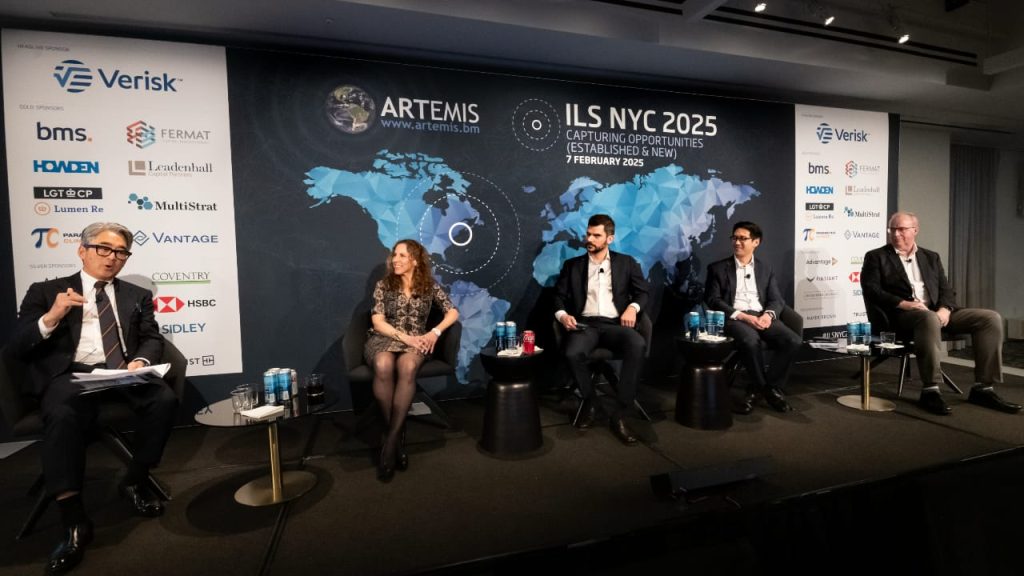
The casualty ILS investment opportunity – ILS NYC 2025 video

This content is copyright to www.artemis.bm and should not appear anywhere else, or an infringement has occurred.

This video features an expert panel discussing the opportunity for investors in the growing casualty insurance-linked securities (ILS) space at our Artemis ILS NYC 2025 conference, which was held in New York on February 7th 2025.
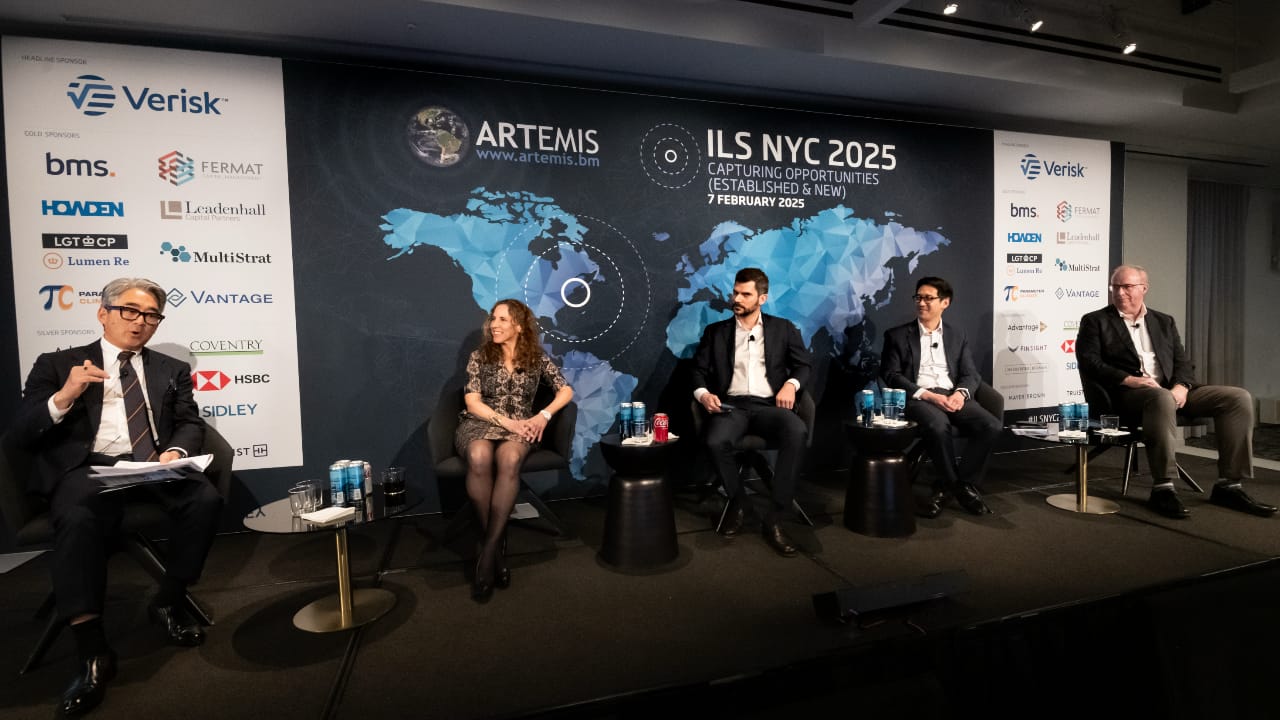
The casualty ILS investment opportunity - ILS NYC 2025 panel 4 videoILS NYC 2025 was Artemis’ eighth catastrophe bond and insurance-linked securities (ILS) conference held in-person in New York and saw more than 425 registered attendees enjoying insightful debates from our expert speakers, as well as valuable networking opportunities throughout the day.

Attendees from across the globe assembled to hear thought-provoking insights from insurance-linked securities (ILS) market leaders, all under the theme of “Capturing opportunities (established & new).”

Our latest video from the Artemis ILS NYC 2025 conference features the fourth panel discussion of the day, which was on the emerging casualty insurance-linked securities (ILS) market where investors are accessing the returns of longer-tailed casualty insurance risks, titled: The casualty ILS investment opportunity.

The panel discussion was moderated by John Seo, Co-Founder, Managing Director, Fermat Capital Management.

He was joined by: David Ni, Chief Strategy Officer, Enstar Group; Andras Bohm, Head of U.S. Capital Solutions & Advisory, BMS Group; Amy Stern, Chief Executive, Reinsurance, Ledger Investing; and Bob Forness, CEO, MultiStrat Group.

While casualty insurance-linked securities (ILS) may seem nascent to some, the market has been in development for a number of years now. The panellists set the scene and explained what this segment of the ILS asset class is, as well as why casualty risks can be attractive investments.

This panel discussed the evolution and potential of the casualty insurance-linked securities (ILS) market, forecasting an opportunity to grow the segment from an estimated $3-4 billion current base to potentially exceeding $10 billion by 2026.

Key points in the discussion included the shift from catastrophe-focused ILS to casualty ILS, driven by improvements to the infrastructure of the ILS market, as well as investor interest in accessing new classes of insurance risk.

The casualty ILS market’s growth is largely attributed to risk sourced through whole account quota shares, which the panel said enable stable, diversified portfolios to be constructed for investors.

The discussion also highlighted the importance of exit solutions to provide investor certainty of liquidity, the need for strong partnerships, and that underwriting discipline is key to manage risks and ensure sustainable growth of the casualty ILS space.

Watch the full video of this casualty ILS market focused panel discussion at ILS NYC 2025 (embedded below), for unique insights into the developing casualty ILS market, what investors need to know about this asset class, and how cedents can benefit from access to efficient capacity from the capital markets.

More videos will follow in the coming weeks from our ILS NYC 2025 conference.

Artemis’ next confirmed conference dates will be (please save them): Artemis London 2025 on September 2nd 2025, and Artemis ILS NYC 2026 on February 6th 2026!

All of our Artemis Live video interviews have a focus on reinsurance, ILS and the efficiency of risk transfer and can be accessed directly from our Artemis Live page.

You can also listen in audio to these interviews by subscribing to the Artemis Live podcast here.

Our conferences provide exposure in front of a highly relevant, senior and specialised group of attendees. Plus you’ll benefit from exposure in front of our entire global readership, which averages more than 65,000 individuals every month.

For all enquiries regarding sponsorship opportunities for future Artemis events please contact events@artemis.bm.

Our conference sponsors for ILS NYC 2025 can be seen below. We thank them all for their valued support:

Artemis ILS NYC 2025 conference sponsors

For all enquiries regarding sponsorship opportunities for future Artemis events please contact events@artemis.bm.

The casualty ILS investment opportunity – ILS NYC 2025 video was published by: www.Artemis.bm
Our catastrophe bond deal directory
Sign up for our free weekly email newsletter here.

Cat bonds offer sustainable investment potential amid rising climate risks: UBS

This content is copyright to www.artemis.bm and should not appear anywhere else, or an infringement has occurred.

A recent report from UBS Group’s global wealth management arm has highlighted catastrophe bonds as a growing sustainable investment opportunity, emphasising their role in climate adaptation and financial protection against extreme weather events.

ubs-asset-management-logoWhile they do not directly prevent disasters, UBS sees them as a crucial tool for helping insurers manage climate risks and for providing swift financial relief to affected communities.

Analysts also highlight cat bonds’ appeal to investors, citing their strong risk-adjusted returns and low correlation with traditional asset classes.

“From an issuer’s perspective, cat bonds can serve as a climate adaptation strategy, allowing insurance companies to manage their exposure to physical climate risks to which they’re exposed though primary insurance activity. This not only enhances the resilience of the insurance market but also provides social protection for those individuals and communities covered by insurance,” UBS said.

Adding: “As the world faces an increasing number of natural catastrophes, cat bonds are becoming increasingly relevant as a means of providing insurance against extreme weather events.”

Beyond their sustainability benefits, catasrophe bonds are also gaining traction among institutional investors due to their attractive financial characteristics. UBS points out that these instruments typically exhibit low correlation with other traditional asset classes, making them an effective hedge against market volatility.

UBS also highlights that investors can benefit from attractive risk-adjusted returns from cat bonds, especially within a low-interest rate environment.

Despite their benefits, UBS also highlights certain limitations that sustainability-focused investors should consider when it comes to cat bonds.

One key issue is the potential misalignment between parametric bond payout triggers and actual damage on the ground. While parametric bonds offer quick payouts based on pre-defined thresholds, such as wind speed or earthquake magnitude, these thresholds do not always align with the financial losses suffered by affected communities.

Furthermore, indemnity bonds, which base payouts on actual losses, offer a more precise alternative but often take longer to distribute funds, potentially delaying recovery efforts.

With extreme weather events becoming more frequent and costly, UBS sees cat bonds as an increasingly relevant investment that aligns financial returns with climate resilience.

The catastrophe bond and insurance-linked securities (ILS) market continues to expand at a rapid pace. Following a record year in 2024, issuance in the first quarter of 2025 managed to reach a huge $7.1 billion, which drove the size of the outstanding market to a new all-time-high of $52.2 billion.

Cat bonds offer sustainable investment potential amid rising climate risks: UBS was published by: www.Artemis.bm
Our catastrophe bond deal directory
Sign up for our free weekly email newsletter here.
Generali seeking to renew its “green cat bond” with EUR200m Lion Re DAC

This content is copyright to www.artemis.bm and should not appear anywhere else, or an infringement has occurred.

Italian and global insurance giant Assicurazioni Generali S.p.A. is looking to renew its soon to mature green catastrophe bond with a new EUR 200 million Lion Re DAC transaction now in the market, that targets European windstorm and Italy earthquake reinsurance for the company, Artemis can report.

generali-green-catastrophe-bondGenerali launched its own framework for Green insurance-linked securities (ILS) back in 2020, and in 2024 the green ILS framework was updated to incorporate new features and expand its scope, resulting in a Green, Social and Sustainability Insurance-linked Securities Framework.

The insurer sponsored its first green catastrophe bond issuance in 2021, the €200 million Lion III Re DAC transaction, securing reinsurance protection against certain losses from European windstorms and Italian earthquakes across a multi-year term.

That deal matures after this June and so now it appears Generali has returned to sponsor a renewal with this Lion Re DAC cat bond issuance, which now falls under the updated green, social and sustainable ILS framework.

Under the framework, Generali can free up capital thanks to the cat bond to be put to work in sustainable investment.

In the case of the Lion III Re catastrophe bond, it freed up €28.1 million of capital for the insurer, under regulatory capital relief calculated on the basis of its Solvency Capital Requirement at the inception of the cat bond risk period. That freed up capital was allocated to a sustainable investment deemed to make a positive environmental impact.

So it’s good to learn that Generali has come back to renew its catastrophe bond coverage and to continue pushing the boundaries on the sustainable investment side of the insurance-linked securities (ILS) market with this new deal.

We’re told that Generali has established a new designated activity company in Ireland for its latest catastrophe bond issuance, Lion Re DAC.

Lion Re DAC is looking to issue two tranches of Series 2025-1 notes that will be sold to investors and the proceeds used to collateralize reinsurance agreements for sponsor Generali.

The notes are designed to provide Generali with a four year source of collateralized reinsurance protection against losses from windstorms across Europe and earthquakes in Italy, the same perils as the soon to mature Lion III Re deal.

The reinsurance protection will be on an indemnity trigger and per-occurrence basis for both of the tranches of notes, we understand.

Lion Re DAC is offering a EUR 125 million Class A tranche of Series 2025-1 notes that will provide Generali with both European windstorm and Italy quake protection, with windstorm coverage attaching at EUR 900m and exhausting at EUR 1.1bn, while earthquake protection would attach at EUR 600m and exhaust at EUR 800m, we are told.

As a result, the Class A notes will have an initial attachment probability of 3.64%, an initial expected loss of 3% and are being offered to cat bond investors with price guidance in a range from a spread of 5.5% to 6.25%.

A EUR 75 million Class B tranche of notes will provide Generali with only Italy earthquake protection, attaching slightly lower down at EUR 400m and exhausting coverage at EUR 500m, we are told.

The Class B notes will have an initial attachment probability of 2.64%, an initial expected loss of 2.33% and are being offered to cat bond investors with price guidance in a range from a spread of 5.25% to 6%, sources said.

For comparison, the soon to mature Lion III Re cat bond featured a single tranche of notes exposed to both perils and had an initial expected loss of 2.99% and priced to pay investors a spread of 3.5%.

Under the terms of Generali’s Green, Social and Sustainability Insurance-linked Securities Framework, the new Lion Re DAC cat bond will free up an amount of the insurers own capital equal to its limit which will then be allocated to eligible projects by the company. While the collateral will be invested in EBRD notes. The insurer will also report on the allocation of the freed up capital and the project benefits derived from that, we understand.

It’s encouraging to see Generali continuing to push the boundaries of ESG within the catastrophe bond market, by following its strict framework and attempting to deliver broader sustainable benefits while also benefiting from the capital markets backed reinsurance the catastrophe bond will provide.

You can read all about this new Lion Re DAC catastrophe bond and every other cat bond ever issued in the Artemis Deal Directory.

Generali seeking to renew its “green cat bond” with EUR200m Lion Re DAC was published by: www.Artemis.bm
Our catastrophe bond deal directory
Sign up for our free weekly email newsletter here.
Transformational expansion of risk transfer to capital markets needed to finance future crises

This content is copyright to www.artemis.bm and should not appear anywhere else, or an infringement has occurred.

With a widening crisis protection gap evident around the world there is a need for a transformational expansion in the use of insurance and reinsurance mechanisms to transfer risks to the capital markets, according to a report from the High-Level Panel on Closing the Crisis Protection Gap.

hlp-crisis-protection-gapsThe report calls for a tenfold increase in the proportion of international crisis finance that is pre-arranged by 2035.

Here, insurance and risk transfer are called out as examples of pre-arranged crisis financing that can serve to transfer financial risks away from public balance sheets, into the private and capital markets.

“In a world where risks can be modelled with ever greater precision, we should not wait to react until a crisis occurs,” explained Co-Chair of the High-Level Panel Sir Mark Lowcock, a former United Nations Under-Secretary-General for Humanitarian Affairs and Emergency Relief Coordinator. “Nor can millions of people in vulnerable communities be left dependent on underfunded, ad hoc financial appeals where more effective financing instruments exist.”

Out of the $76 billion spent on crisis finance in 2022, below 2% of this was prearranged, according to research by the Centre for Disaster Protection, while just 1.4% of that reached low-income countries.

Highlighting the scale of the gap that requires financing, the report explains that annual global economic losses from unmitigated climate change are projected to range between $7 trillion and $38 trillion by 2050.

As a result, “The High-Level Panel is calling for a transformation in the level of effort dedicated to transferring risks from public balance sheets to capital markets.”

“With human and economic costs already mounting, the world cannot afford to continue treating crises as unexpected surprises,” said Arunma Oteh, Co-Chair of the High-Level Panel and a former World Bank Vice President and Treasurer. “This is not just about the quantity but also the quality of finance which is being provided. Reactive funding is too slow, too costly, and leaves the world needlessly exposed. Prearranged finance must become the default for all predictable and modellable crises, not the exception.”

The High-Level Panel explains that it is, “unequivocal that all forms of insurance are central to this transformation.

“With projected crisis costs projected even conservatively in the trillions annually by 2050, capital markets hold relatively untapped potential for securing essential public assets like roads, hospitals, and power grids, and for transferring enormous financial risks away from public balance sheets.”

Adding that, “The High-Level Panel considers options for pre-arranged financing to be becoming more feasible and applicable due to recent technical advances in financial technology, risk transfer instruments, and risk modelling, but their use is not yet growing commensurately.”

The evolution of the insurance and reinsurance industry, including the development of insurance-linked securities (ILS) instruments such as catastrophe bonds, are seen as key for delivering the pre-arranged crisis financing that is required.

“The High-Level Panel considers options for pre-arranged financing to be becoming more feasible and applicable due to recent technical advances in financial technology, risk transfer instruments, and risk modelling, but their use is not yet growing commensurately,” the report explains.

Instruments such as catastrophe bonds, “provide governments with immediate liquidity in the wake of a disaster, enabling rapid response without destabilizing national economies.

“Much of this innovation is driven by parametric insurance, where payouts are triggered by specific data points (e.g., wind speed or rainfall levels), eliminating the delays of traditional claims processes.”

At the same time, indemnity structures are also evolving, while blended finance approaches are securing contingent financing for those exposed to crises such as climate risks.

“This growing sophistication is helping to support long-term community resilience, reduce economic and social disruptions caused by disasters, and build stronger frameworks for managing crises effectively,” the report states.

There’s a clear role for insurance-linked securities (ILS) mechanisms as a structure for transferring crisis related risks to the capital markets, while insurance and reinsurance product design and techniques can be leveraged with the help of private market participants as well.

Of course, none of this is new or groundbreaking and we’ve been calling for greater use of capital markets structures and infrastructure, alongside risk transfer technology, to close the still-widening insurance protection gap for over two decades now.

What’s needed are concerted efforts to put the onus on protection of lives, communities, livelihoods and economic activity for economic actors, with a focus on ensuring governments and corporations around the world take some greater level of responsibility for the financial exposure their respective constituents face due to crises.

The insurance, reinsurance and ILS industries are always available to help in delivering risk transfer solutions, but there needs to be buyers of protection and markets for risk.

These just don’t exist meaningfully currently, in the areas of the global economy where financial impacts of crises go uncovered. As there is no onus on those generating, deriving, or extracting economic value to account for these risks and put in place more meaningful protection of their constituents and dependents.

Transformational expansion of risk transfer to capital markets needed to finance future crises was published by: www.Artemis.bm
Our catastrophe bond deal directory
Sign up for our free weekly email newsletter here.
Cat bonds have emerged as a socially responsible investment: Man Group

This content is copyright to www.artemis.bm and should not appear anywhere else, or an infringement has occurred.

The stable return profile of catastrophe bonds and their historically low correlation with broader financial markets have traditionally been the main reasons investors considered an allocation of cat bonds into their portfolio, however, more recently, investors have started recognising catastrophe bonds for their social impact, as per a new report from the Man Group.

esg-globe-world-ilsAccording to the firm, a “new breed” of cat bonds has now emerged, aimed at preventing disaster and extending coverage for low-income countries unable to mobilise proper financing to fight a looming disaster.

The UN reportedly defines resilience as the “ability of a system, community or society exposed to hazards to resist, absorb, accommodate to and recover from the effects of a hazard in a timely and efficient manner.”

The Man Group continued, “The cover that catastrophe insurance provides sits firmly within this definition.

“Not only does it compensate for losses, but the use of parametric triggers can mean that payments are made more quickly than if actual losses had to be assessed (particularly in emerging markets where the claims process is generally less well developed).”

Continuing, “Now, cat bonds are also emerging as a socially responsible investment. For the insured risk, cat bonds provide an element of risk transfer back to investors.”

Man Group highlighted named storm cover for Jamaica, earthquake cover for the Turkish Catastrophe Insurance Pool, and the Pacific Alliance cat bonds as examples which illustrate how these insurance-linked securities (ILS) instruments can aid in building risk transfer resources and disaster resilience.

“As a sign of confidence in this asset class, the market capitalisation is growing at an impressive rate.

“New, innovative bonds are emerging as a very effective tool in providing a new kind of social benefit, while helping generate uncorrelated risk-adjusted returns for investors,” the firm’s report concluded.

Environmental, social and governance (ESG) investing remains a key area of focus for the insurance-linked securities (ILS) market and with the asset class ticking many boxes for a socially responsible mandate, investors are increasingly looking to understand the beneficial features of the cat bond instrument.

Cat bonds have emerged as a socially responsible investment: Man Group was published by: www.Artemis.bm
Our catastrophe bond deal directory
Sign up for our free weekly email newsletter here.

COP29 ends with Loss and Damage fund progress, strategic direction set for Global Shield

This content is copyright to www.artemis.bm and should not appear anywhere else, or an infringement has occurred.

COP 29, the United Nations Climate Change Conference held in Baku, Azerbaijan, has drawn to a close with agreement on certain areas and progress being made on the much-discussed Loss and Damage, as well as the Global Shield, two programs of some relevance to insurance, reinsurance and insurance-linked securities (ILS) markets.

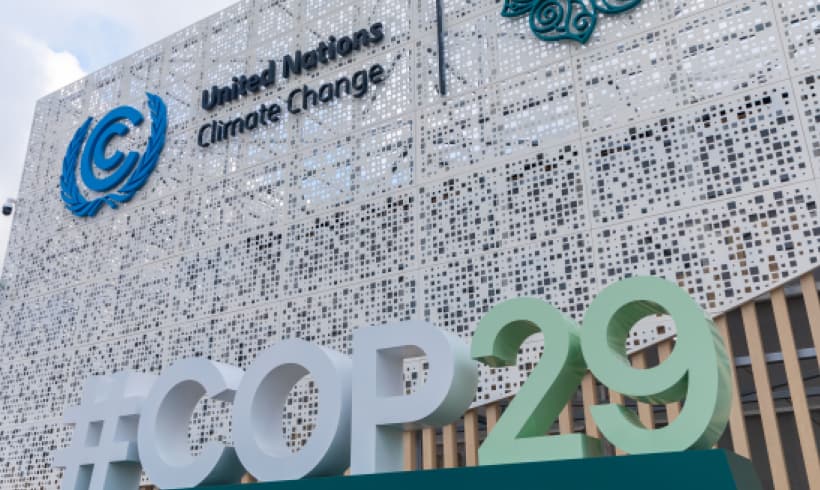
cop29-imageWhile the COP29 meetings concluded with an agreement on financing amounting to $300 billion per-year for developing countries, concern has been raised over that figure falling far-short of the amount those nations believe is required to respond to the climate impacts they are already facing, as well as boost their readiness for and resilience to climate related exposures.

The Fund for Loss and Damage has been designed to help the countries that are most vulnerable to the adverse effects of climate change.

At COP29, agreement has been reached on fully operationalising the loss and damage fund, although there is still significant work to do on the finer details of how support and financing will be delivered.

Working with the Board of the loss and damage fund and the World Bank, the COP29 Presidency said it has advanced measure to operationalise the fund, while also appointing former Group Director General of the parametric risk pooling and parametric insurance facility, African Risk Capacity (ARC), Ibrahima Cheikh Diong as the Fund’s Executive Director.

In addition, key documents were signed at COP29, including a “Trustee Agreement” and “Secretariat Hosting Agreement” between the Fund for Loss and Damage’s Board and the World Bank, as well as a “Host Country Agreement” between the Fund’s Board and the host country, which is set to be the Republic of the Philippines.

Financial support and commitments to the loss and damage fund now exceed $730 million, with the largest contributions made during COP29 coming from Australia and Sweden.

As a result, the COP29 Presidency said that the loss and damage fund is now “ready to distribute funds in 2025 by securing contributor agreements and pledges as well as signing the host country agreement with the Philippines and hosting and trustee agreements with the World Bank.”

As well as the commitments made to the Fund, it is still expected that once operationalised there will be work undertaken to identify whether and how private capital financing instruments also have a role, in financing climate related loss and damage for the most vulnerable and developing nations of the world.

As we’ve also explained in the past, the insurance, reinsurance and insurance-linked securities (ILS) markets have a role to play here, albeit further down the line, once agreement has been reached on financing instruments, tools, structures and how to actually disburse loss and damage fund capacity, are made.

We’ve highlighted the potential for there to be an important role for responsive risk transfer, such as risk transfer and insurance delivered through structures that utilise parametric triggers and risk-sharing systems have been a topic of discussion around loss and damage since the start.

With a former ARC executive now leading the Fund, it will be interesting to see how financing structures can be hybridised, to incorporate elements of risk transfer, to finance responses to future climate disasters, as well as the pure financing for mitigation and resilience that is expected to be needed.

Around the set-up and operationalising of the fund for responding to loss and damage, insurance and related risk transfer instruments have been broadly discussed as having a role to play.

The Fund’s Board has explored examples of risk pooling and parametric insurance, while also gaining an understanding of other risk transfer instruments, including catastrophe bonds.

Premium subsidies are seen as one use-case for financing from the loss and damage fund, although there is a lot of work to do around how any instruments that require premiums to be paid to private market actors are integrated within the overall loss and damage financing deployment.

Which leads us onto the second area of progress seen at COP29 that has relevance for the insurance, reinsurance and ILS community, the setting of a strategic direction for the Global Shield against Climate Risks.

The Global Shield against Climate Risks was launched after COP27, alongside the World Bank officially launching its Global Shield Financing Facility.

These two initiatives embed disaster risk financing techniques, in particular responsive risk transfer and anticipatory financing, at the heart of global efforts to build resilience to climate change and climate driven natural disaster events.

In 2023, the Global Shield Solutions Platform (GSSP) was also launched as a multi-donor grant facility and one of the core financing vehicles of the Global Shield, designed to help vulnerable countries effectively address loss and damage exacerbated by climate change.

Now, at COP29, a strategic direction has been set for the Global Shield initiative, with at least 17 countries targeted for its initial implementation and for specific activities to be taken.

Within the scope is parametric insurance and risk transfer, with use of these instruments expected to be scaled up under the Global Shield, while insurance-linked securities (ILS) such as catastrophe bonds still feature in Global Shield related texts.

At COP29, like previous conferences, the insurance and reinsurance industry was well-represented by key players and the efforts to embed insurance at the heart of climate financing discussions continues.

Efficiency, of risk transfer, and its responsiveness, as well as the efficiency of risk capital itself, will be critical for the future of such efforts.

But so too will investment in mitigation and structural innovation, to identify equitable ways to use the funding appropriately and to harness the appetite of private capital in support of climate financing and the broader climate transition.

Also read: Risk-sharing systems must be a pillar of Loss and Damage architecture: Report.

COP29 ends with Loss and Damage fund progress, strategic direction set for Global Shield was published by: www.Artemis.bm
Our catastrophe bond deal directory
Sign up for our free weekly email newsletter here.

Schroders Capital invested $817m+ in ILS that help reduce protection gap in 2023

This content is copyright to www.artemis.bm and should not appear anywhere else, or an infringement has occurred.

During the full-year 2023, the catastrophe bond and insurance-linked securities (ILS) team at private markets focused investment manager Schroders Capital allocated over US $817 million to transactions that specifically help in reducing the insurance protection gap.

schroders-capital-logoSchroders Capital has quantified this area of impact that its cat bond and ILS investment management unit has been making for a recent report on the firm’s broader sustainability focus.

While it is clear that catastrophe bonds and insurance-linked securities (ILS), as an alternative mechanism for sourcing reinsurance capital, are inherently providing protection against disaster and enabling the insurance industry to better bear the risks it underwrites, Schroders Capital has categorised transactions it specifically feels are making a difference on helping to cover more uninsured economic losses.

The investment manager sees its capital making a difference, saying that if “managed carefully, can unlock… significant improvement potential for people and planet.”

One area is in driving increased availability of insurance and reinsurance protection, specifically, “through increased climate insurance coverage in emerging markets, private equity or via ILS cat bonds.”

Schroders Capital further explained, “In 2023, only 40% of losses resulting from natural disasters globally were covered by insurance, leaving a value of US$172 billion uninsured.

“Our ILS team works to reduce this protection gap by allocating a percentage of their sustainable investment portfolios to specific transactions designed to increase insurance coverage, providing a sense of security to communities providing rapid relief when a disaster hits, and enhancing overall resilience. Developing and emerging markets are the most vulnerable to the consequences of climate change.”

In addition, Schroders Capital highlighted that between 2014 and 2023, some 85% of economic losses caused by natural disasters in Asia were not covered by insurance.

Highlighting the $125 million Charles River Re Ltd. (Series 2024-1) catastrophe bond, that was sponsored by American European Insurance Company, Schroders Capital explained why this transaction was deemed to contribute to narrowing the insurance protection gap.

“The need for such cover was exemplified with Superstorm Sandy: in such events, risks carriers often face ‘concurrent causation’ and are caught between the homeowners insurance company and the flood insurance company, one arguing that the event was caused by flood, the other one by wind. It is costly and leaves the policyholder uncovered, impacting the reputation of the insurance company and the industry more broadly.

“With this cat bond, the sponsor offered a flood endorsement on each quotation, resulting in a differentiated product with the target being value-oriented mass affluent homeowners,” the asset manager explained.

Despite certain deficiencies when it came to ESG scoring this catastrophe bond, Schroders Capital noted, “The transaction structurally and explicitly addresses the protection gap when it comes to the availability of coastal flood risk which is generally not offered by the insurance market.”

Insurance-linked securities (ILS) is an area that Schroders Capital sees as a focus in its sustainability and impact efforts.

“Our ILS sustainable strategies, including one of the world’s largest cat bond funds, are a good example: they provide a suitable reinsurance alternative for local governments or NGOs against e.g. extreme whether events, reducing insurance protection gap while at the same time delivering competitive financial returns,” the company said.

Schroders Capital has also been one of the ILS managers that have helped to drive greater ESG transparency through the catastrophe bond and broader ILS marketplace.

The investment manager was a founding member of the ILS ESG Transparency Initiative, which was formed as an insurance-linked securities (ILS) industry group focused on enhancing environmental, social and governance (ESG) transparency in the ILS market.

Schroders Capital believes that effort has made a significant contribution so far, highlighting that ESG disclosure has increased in the marketplace.

The company said that its internal data suggests “that 77% of ILS cat bond transactions have made ESG questionnaires available deals in Q4 2023,” which is a significant increase.

Georg Wunderlin, CEO, Schroders Capital, commented, “Sustainability is more critical than ever to deliver long-term competitive returns. It is simply a once in a generation business opportunity.

“Our ambition is to build a new type of private markets firm, one which is anchored in sustainability and delivers the superior performance and real-world difference our clients expect from us.”

ESG investing, sustainability and opportunities they present, remain an area of focus for the insurance-linked securities (ILS) market. Read more of our insights on this topic here.

Schroders Capital invested $817m+ in ILS that help reduce protection gap in 2023 was published by: www.Artemis.bm
Our catastrophe bond deal directory
Sign up for our free weekly email newsletter here.
Parametric insurance can help close US $1.8tn protection gap: Generali and UNDP

This content is copyright to www.artemis.bm and should not appear anywhere else, or an infringement has occurred.

A joint report published by insurance giant Generali and the United Nations Development Programme (UNDP) highlights parametric risk transfer and insurance as a key solution that can help to close the US $1.8 trillion protection gap.

UNDP Generali logos“Parametric insurance is speeding up recovery from climate-related hazards and other shock events, especially for communities in vulnerable contexts,” the pair explain.

Adding that case studies show how parametric insurance can contribute to improved financial resilience for households, businesses and global value chains.

Parametric and index-insurance products are seen as viable ways to enable governments, businesses and communities around the world to financially prepare better for what are seen as increasingly frequent and severe natural hazards, ranging from drought, extreme heat and tropical cyclones to storm surges, earthquakes and other shocks.

As parametric policies can provide pre-agreed payouts that are based on independently verified triggers, typically based on the parameters of a weather, climate or catastrophe event instead of assessed losses, it can drive faster payouts and therefore fund a faster recovery from impacts and losses.

Parametrics are seen as a “complementary risk transfer mechanism to fill gaps left by traditional indemnity-based insurance.”

Christian Kanu, CEO of Generali Global Corporate & Commercial (GC&C) commented, “This report demonstrates our commitment to addressing the protection gap by offering innovative insurance solutions that can strengthen the resilience of underinsured communities in many regions of the world. Parametric insurance can be transformative, providing cost-effective, efficient risk coverage to those previously unreachable by traditional insurance. Consequentially, this helps communities and businesses cope with natural hazards and operational interruptions. At Generali GC&C, we are proud to be the Group’s center of excellence for parametric insurance, and we will continue striving to be Lifetime Partners for our clients.”

Jan Kellett, Global and Corporate Lead on Insurance and Risk Finance at UNDP, added, “Of critical importance to this work is the role of government. Our joint UNDP-Generali report makes one thing clear – the insurance industry cannot scale parametric solutions to build financial resilience without the appropriate ecosystem. Development actors must significantly increase efforts to establish supportive regulations and policies that allow parametric insurance to contribute meaningfully to closing the financial protection gap.”

Generali’s partnership with the UNDP has “an ongoing commitment to scale financial protection by fostering wider public-private collaboration,” the pair explain.

The ultimate goal is to help “create the kind of ecosystem necessary to support the growth of parametric insurance as a tool to protect vulnerable communities.”

Previously, the two entities had announced a partnership focused on the creation of digitally enabled parametric insurance solutions.

Parametric insurance can help close US $1.8tn protection gap: Generali and UNDP was published by: www.Artemis.bm
Our catastrophe bond deal directory
Sign up for our free weekly email newsletter here.
Nat cat gap expands 5.2% to $385bn, but protection more available: Swiss Re

This content is copyright to www.artemis.bm and should not appear anywhere else, or an infringement has occurred.

The global natural catastrophe protection gap widened again in 2023, rising 5.2% to US $385 billion in premium equivalent terms, but at the same time Swiss Re reports that there are signs of more protection being available, which over time should see more losses covered by insurance and reinsurance.

swiss-re-instituteSwiss Re’s Institute sigma research team said that the firm’s measure for the global natural catastrophe insurance protection gap widened due to economic growth and inflation last year.

Positively though, “Global protection available increased by 10.1% yoy in 2023, greater than the 6.3% yoy rise in protection needed, resulting in improved resilience, an encouraging underlying trend in risk protection,” the reinsurance company explained.

Adding that, “These growth rates indicate that although there are more, or more expensive, assets to protect, an increasing share of them are covered by insurance.

“This is a positive trend for global resilience if it continues in the long term.”

According to Swiss Re’s analysis, global insurance resilience was stable at 58% in 2023, helped by gains in mortality resilience due to higher life insurance take-up, and in emerging markets’ health resilience as well.

Overall though, the global protection gap across insurance perils reached a new high of US $1.83 trillion in premium equivalent terms in 2023, up by 3.1% in nominal terms from a restated US $1.77 trillion for 2022.

The global protection gap has expanded by 3.6% annually in nominal terms since 2013, Swiss Re said, which roughly matches nominal GDP growth trends.

Natural catastrophe resilience, a measure of how much in economic losses was covered by insurance and reinsurance, rose to 25.7% in 2023.

But Swiss Re noted that a key driver of this was the fact 2023 saw a high proportion of severe convective storm losses, especially in the US, which is a peril and region that is relatively more insured than others.

“The past 10 years have seen improvement in global natural catastrophe insurance resilience. However, the key driver has been a strong rise in advanced markets resilience, which increased to above 38% in 2023 from around 35% in 2013. In emerging markets, resilience is typically still extremely low, and regions are almost entirely unprotected from natural catastrophe risk,” Swiss Re’s sigma team explained.

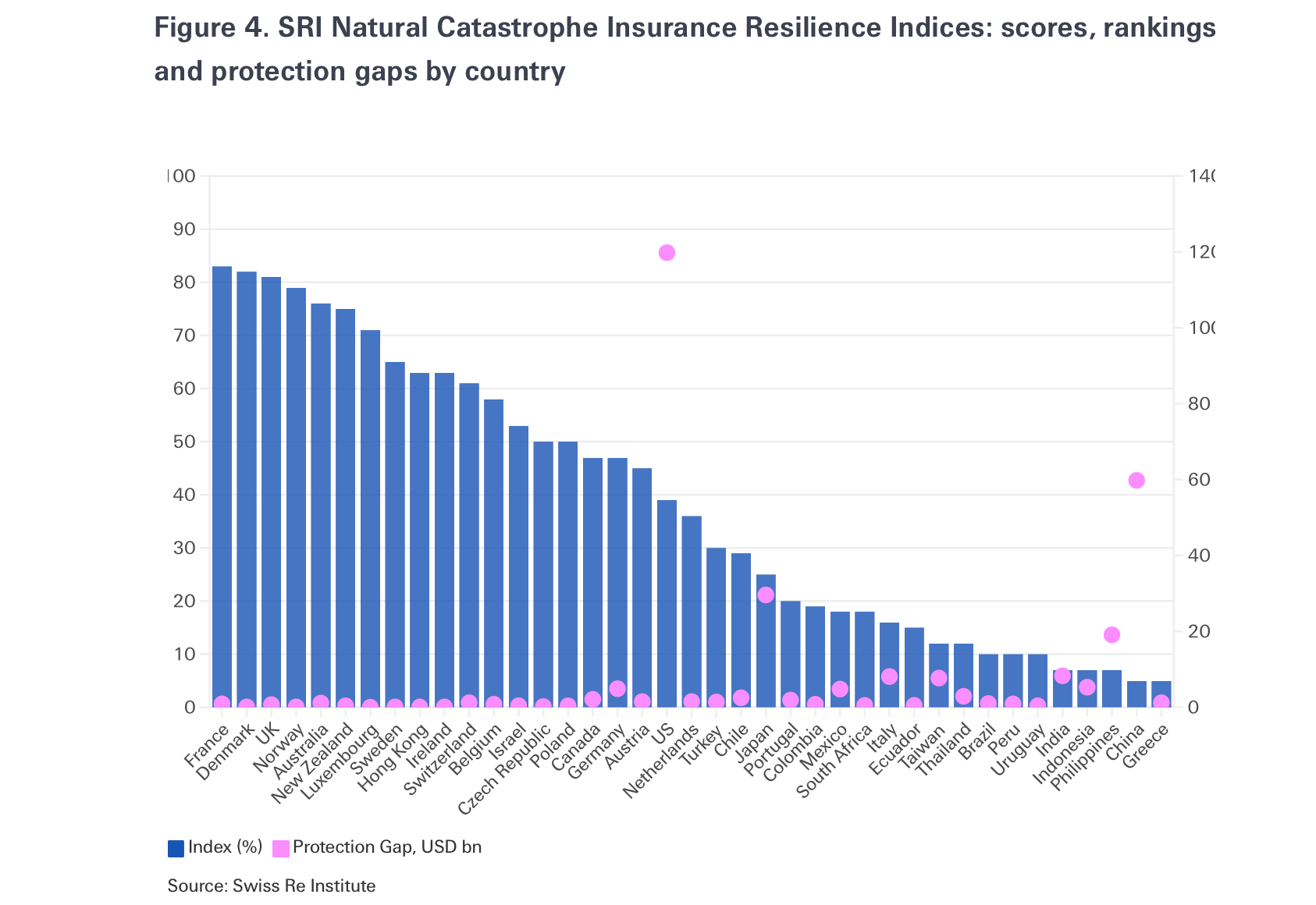
There is a significant dispersion in how resilient and protected by insurance countries are from natural catastrophe events, with some countries such as France, Denmark and the UK indexing above 80% resilient, but the United States down at 39%, and other countries as low as 5%.

natural-catastrophe-resilience-protection-gaps-swiss-re

Demonstrating the continued opportunity to deliver more catastrophe risk capital to support the needs of country’s with high protection gaps, the United States had a significant US $119.8 billion nat cat protection gap in 2023, while China had US $59.8 billion of the global total, Japan US $29.6 billion and the Philippines US $19.1 billion.

Swiss Re noted that global crop resilience is an area of opportunity for the insurance and reinsurance market, with a need to strengthen it further and re/insurance able to play a role.

In addition, the research suggests a growing role for innovative risk transfer arrangements such as those using parametric triggers to help in driving global crop protection higher.

While at the same time, more crop reinsurance coverage is also needed to support expansion of programs and to cover more critical global crop production.

On a more cautionary note, Swiss Re also highlighted that rising natural catastrophe and weather insurance losses are driving prices higher, which can have the effect of widening the protection gap further still.

“So far there has been little evidence that a lack of affordability of property catastrophe insurance is jeopardising resilience gains, but it is yet to be seen if this remains so in the future,” the reinsurer said.

Which speaks to the need for more efficient catastrophe risk capital to help in provision of the reinsurance needed to support primary insurers as they adapt to the nat cat reality we see today.

So, while there may be signs that more protection is available today and that is positive for the future, it appears more capital and capacity, as well as use of innovative risk transfer structures, may be required to meaningfully narrow these gaps.

Nat cat gap expands 5.2% to $385bn, but protection more available: Swiss Re was published by: www.Artemis.bm
Our catastrophe bond deal directory
Sign up for our free weekly email newsletter here.

Generali updates insurance-linked securities framework to “green, social & sustainable”

This content is copyright to www.artemis.bm and should not appear anywhere else, or an infringement has occurred.

Italian and global insurance giant Assicurazioni Generali S.p.A. has revised its framework for green catastrophe bonds to incorporate updates and expand its scope, now publishing a Green, Social and Sustainability Insurance-linked Securities Framework in its place.

generali-green-catastrophe-bondGenerali was early to recognise the potential for insurance and reinsurance linked investments to have green, or environmental, social and governance (ESG) credentials.

Because of the insurers focus on this, Generali launched its own framework for Green insurance-linked securities (ILS) back in 2020.

That framework defined how Generali could use the freed-up capital benefit achieved through its sponsorship of an ILS or catastrophe bond transaction for Green asset investments.

At its core, that meant an amount equivalent to the capital relief benefit achieved through issuance of a Green ILS or cat bond transaction could be exclusively used to allocate capital to, or refinance, green initiatives, projects or assets, under Generali’s framework.

The insurer sponsored its first green catastrophe bond issuance in 2021, the €200 million Lion III Re DAC transaction.

Those €200 million of cat bond notes provided Generali with reinsurance protection against certain losses from European windstorms and Italian earthquakes across a multi-year term.

As we later reported, Generali said that, in the case of the Lion III Re catastrophe bond, it freed up €28.1 million of capital for the insurer, under regulatory capital relief calculated on the basis of its Solvency Capital Requirement at the inception of the cat bond risk period.

That freed up capital was allocated to a sustainable investment deemed to make a positive environmental impact, in this specific case it refinancing a green asset that Generali already had interest in, the Tour Saint-Gobain in Paris, a building project that asset management unit Generali Real Estate was behind, and that on completion achieved the highest marks possible for four international environmental certifications.

It was found that the €28.1 million of capital, freed up due to the issuance of the Lion III Re catastrophe bond, had served to avoid 35.1 tCO2e of greenhouse gas emissions, after an audited impact evaluation undertaken by a third-party specialist.

Now, Generali has revisited the green ILS framework and updated it to become the Generali Green, Social and Sustainability Insurance-linked Securities Framework.

The insurer said that the company “recognises the crucial role the financial industry must play in the transition to a low carbon economy and strives to have an active role in the further development of a sustainable financial market.”

To enhance its ability to address environmental and sustainability issues, where Generali can affect positive change, the new framework has been developed under which the insurer can issue sustainable ILS instruments.

The company further explained, “This Green, Social and Sustainability ILS Framework represents Generali’s latest efforts to align its program with best practice, promote SRI principles, and enhance its ability to support stakeholders in realising their green and social objectives. We see the issuance of Green, Social and Sustainability (‘GSS’) labelled ILS as an effective tool to make a positive contribution to the climate and/or the society, while achieving the Sustainable Development Goals of the United Nations (‘UN SDGs’).

“Through GSS ILS, we aim to further diversify our investor base, focusing on socially responsible and highly dedicated sustainable investors and by strengthening the relationship with the existing investor base.”

As the company has taken important steps to enhance its green strategy since the publication of the first Green ILS Framework, Generali says it has now expanded it further, launching the new framework to align with its Green, Social and Sustainability Bond Framework that was published in December 2023.

Now, under the new Green, Social and Sustainability ILS Framework, Generali can categorise different types of sustainable ILS, including:

  • Green ILS, to finance and/or refinance Eligible Green Assets.
  • Social ILS, to finance and/or refinance Eligible Social Assets.
  • Sustainability ILS, to finance and/or refinance a mix of Eligible Green Assets and Eligible Social Assets.

So as to maximise the impact of the new framework and its contribution to a sustainable financial market, Generali said that it is designed “to reflect the structure of an ILS transaction, which allows the allocation funds to Green, Social and Sustainability initiatives following two different approaches.”

This is, through the use of the freed-up capital benefit, as in the previous case with Lion III Re, and also by use of the proceeds segregated in the SPV in a portfolio of Green and Social investments.

By expanding the scope of its framework for green, social and sustainable cat bonds and ILS, Generali is also aligning with the needs of many investors, that continue to have a strong focus on ESG appropriate assets.

Generali has commissioned Sustainalytics to conduct an external review of the new Green, Social and Sustainability ILS Framework.

Giving its opinion, that company explained, “Sustainalytics is of the opinion that the Generali Green, Social and Sustainability Insurance-linked Securities Framework is credible, impactful and will deliver overall positive environmental and social impacts. Sustainalytics is further of the opinion that the principles of impact and transparency that underlie the responsible investment industry, as well as many of its norms and standards, are applicable to the green, social and sustainable insurance-linked securities (ILS) instruments to be issued under the Framework.

“Sustainalytics is of the opinion that the Generali Green, Social and Sustainability Insurance-linked Securities Framework is impactful, transparent and in alignment with core market expectations.”

Generali’s first green catastrophe bond, the Lion III Re DAC transaction, remains in-force through to June 2025.

With this new framework in place, it will be interesting to see what green, social or sustainability features the insurer incorporates into its next cat bond deal.

Read our stories about ESG investment in catastrophe bonds and insurance-linked securities (ILS).

Generali updates insurance-linked securities framework to “green, social & sustainable” was published by: www.Artemis.bm
Our catastrophe bond deal directory
Sign up for our free weekly email newsletter here.